

5 minute sensory breaks
A sensory break is a short, purposeful pause that gives a child’s nervous system the input it needs to calm down, wake up, or reorganize. It works by shifting arousal through movement, pressure, touch, sound, or sight, which resets attention so learning or play can continue. Sensory breaks help children with sensory processing differences, autism, and ADHD, but they support any child who needs a few minutes to regulate.
TL;DR:
- Sensory breaks should be tailored to the child’s current arousal state, using movement or pressure to help regulate levels of attention and calmness.
- Most effective sensory breaks last two to five minutes and should be scheduled predictably every 20 to 45 minutes, depending on age and needs.
- Choosing activities based on specific sensory system categories—movement, proprioception, tactile, visual, auditory, or oral—improves regulation outcomes.
- A simple, three-activity sensory break menu separated into calming, movement, and alerting options can be implemented quickly and with minimal equipment.
- Consistently using a visual label or choice board and teaching explicit selection routines ensures children independently access and benefit from sensory breaks.
Table of Contents
- What Is a Sensory Break, and Why Does It Work?
- How Often Should Kids Take a Sensory Break?
- How to Pick the Right Kind of Sensory Break
- A Categorized Bank of Sensory Break Ideas
- A Ready-to-Use 5-Minute Sensory Break Menu
- Making Sensory Breaks Work in the Classroom or at Home
- Individualizing and Staying Safe With Sensory Activities
- Where Edhed Learning Fits Into Sensory Support
- What I’d Tell Any Teacher Starting This Tomorrow
- Turn This Idea Bank Into a Ready-Made Resource
- Sources
- FAQ
What Is a Sensory Break, and Why Does It Work?
A sensory break gives the body’s sensory systems, vestibular (balance), proprioceptive (body position and pressure), tactile, auditory, visual, and oral or olfactory, a chance to send fresh input to the brain. That input directly changes arousal level. A child who’s bouncing off the walls needs a different kind of input than one who’s slumped over a desk, and the right kind of movement or pressure can nudge either child back toward a “just right” state for focus.
This isn’t a fringe classroom trick. Short sensory breaks lasting about two to five minutes improve attention and help students return to a lesson more ready to engage. For autistic children in particular, sensory input can either soothe or overwhelm depending on the trigger, which is why resources like Autism Speaks’ sensory guidance recommend identifying specific sensitivities before choosing an activity.
Pro Tip: If you only remember one thing from this section, remember this: the goal isn’t to burn off energy. It’s to match the input to what the child’s body actually needs at that moment.
How Often Should Kids Take a Sensory Break?
Timing matters as much as the activity itself. A break that’s too short does nothing; one that runs too long eats into instructional time or turns into a stall tactic. Most sensory breaks work best at two to five minutes, though outdoor movement or heavy-work activities can stretch to eight or ten minutes when there’s room for it.
Frequency depends on age and setting:
- Preschool and early elementary kids often need a break every 20 to 30 minutes, matching typical attention spans at that age.
- Upper elementary and middle school students can usually go 40 to 45 minutes between scheduled breaks.
- Kids with ADHD or sensory processing differences may need shorter, more frequent breaks regardless of age or grade level.
Scheduling breaks at predictable points, like before a transition, after a test, or right after lunch, tends to work better than only offering them in response to a meltdown. Classroom resources consistently recommend proactive, scheduled breaks over reactive ones, since predictability prevents the break from feeling like a reward for acting out. Responsive breaks still have a place; if a child is visibly escalating, waiting for the “scheduled” moment can backfire.
How to Pick the Right Kind of Sensory Break
The biggest mistake caregivers make isn’t skipping breaks. It’s choosing the wrong type for what the child actually needs. A wired, restless kid doesn’t need more stimulation; a sluggish, zoned-out kid doesn’t need to sit still and breathe. Movement, deep pressure, and calming input each shift arousal in different directions, and matching the input to the child’s current state is the whole game.
Here’s a simple way to decide:
- Watch for the signal. Is the child fidgety and loud, or flat and unfocused, or visibly overwhelmed and shutting down?
- Sort the state. Restless and wound up calls for calming input. Sluggish and low-energy calls for alerting input. Overwhelmed calls for retreat and quiet, low-stimulation options.
- Pick one activity, not five. Offering too many choices at once adds decision fatigue on top of dysregulation.
- Check in after two minutes. If the child seems more settled, ease back into work. If not, switch categories rather than repeating the same activity.
Pro Tip: When you genuinely can’t tell which direction a child needs, default to heavy work. Proprioceptive input like pushing, pulling, or carrying tends to organize the nervous system in either direction, which makes it the safest starting point when a child’s state is hard to read.
A Categorized Bank of Sensory Break Ideas
Grouping activities by sensory system makes it much faster to grab something that fits, whether you’re standing in a classroom with 25 kids or sitting on the living room floor with one. Categories overlap in practice, a trampoline session is both vestibular and proprioceptive, but sorting them this way still speeds up decision making, especially with PDF activity banks built the same way.
Movement and vestibular activities (best for restless or under-alert kids):
- Trampoline jumps or “wall push” jumping jacks for 60 seconds.
- Animal walks (bear crawl, crab walk, frog jumps) across the room or hallway.
- Spinning in a desk chair for a slow count of ten, then stopping and steadying.
- Swinging on playground equipment for two to three minutes.
Proprioceptive activities and heavy work (calming and organizing for almost any state):
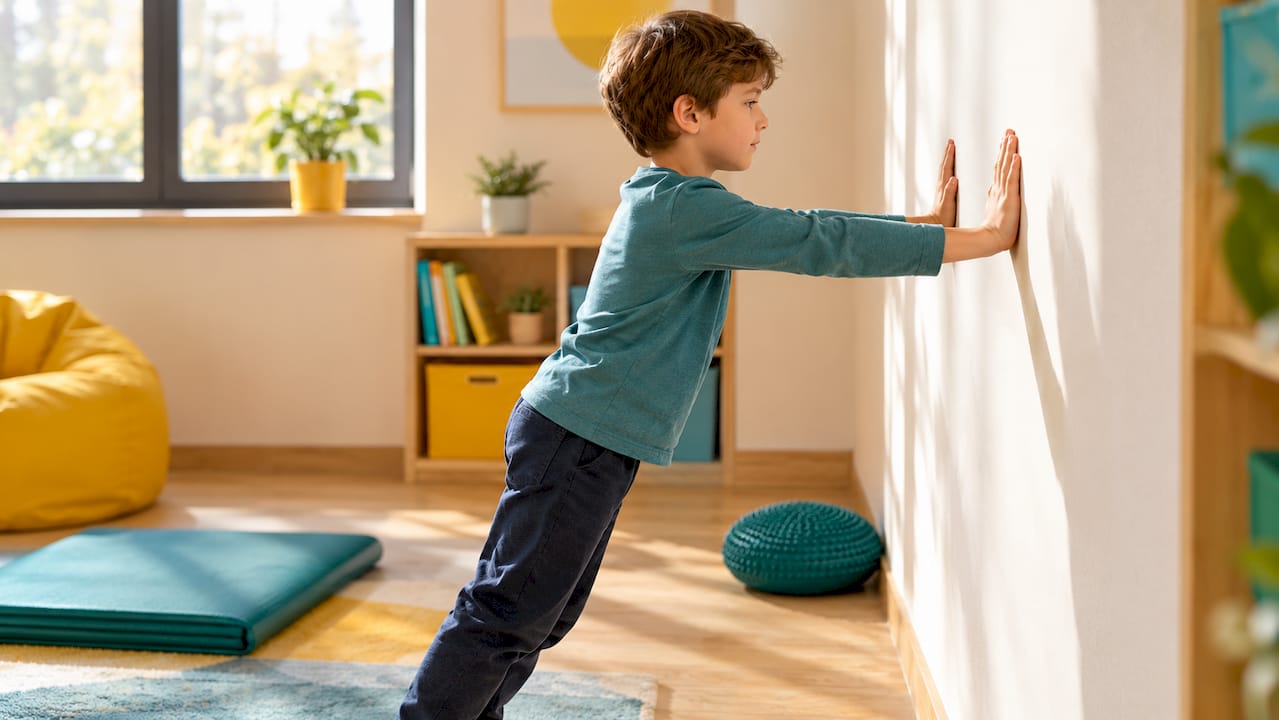
- Wall pushes: hands flat on the wall, push as hard as possible for ten seconds, repeat five times.
- Carrying a stack of books or a weighted backpack across the room and back.
- Chair push ups: hands on the seat, lift the body an inch off the chair, hold, release.
- A weighted lap pad or stuffed animal during seated work.
Tactile activities (grounding for kids who seek or avoid touch):
- Playdough or putty squeezing for two minutes.
- A sensory bin with rice, beans, or water beads for scooping and sorting.
- A texture walk barefoot across different surfaces (carpet, tile, a bath mat).
- Finger painting or shaving cream on a table for one quick round.
Visual and auditory resets (useful for overstimulated or distracted kids):
- Watching a glitter jar settle for 60 to 90 seconds.
- A calm instrumental playlist through headphones for a five-minute reset.
- Tracking a moving object (a ball, a flashlight beam) with the eyes only.
- Noise-canceling headphones during a loud transition, like a fire drill or assembly.
Oral and olfactory options (best used with clear supervision):
- Chewy items like a chewing gum stick or a chew necklace designed for sensory use.
- Crunchy snacks such as carrot sticks or pretzels between tasks.
- Smell jars with mild, familiar scents like vanilla or citrus.
- Drinking water through a straw, which offers mild oral input with zero equipment.
Desk, standing, and whole-room options for classroom practicality:
- Desk-level: isometric chair pushes, stress ball squeezes, or a fidget tool.
- Standing: wall pushes or a standing desk swap for ten minutes.
- Whole-room: a movement song, a lap around the classroom, or a quick partner stretch.
Not every kid needs every category. A child who’s tactile-avoidant will hate the sensory bin and love the heavy work options, and that’s fine. The point of a categorized bank is choice, not a checklist everyone has to complete.
A Ready-to-Use 5-Minute Sensory Break Menu
A short, predictable menu takes the guesswork out of picking an activity on a busy afternoon, and it’s the fastest way to turn this whole idea bank into something you can actually post on a wall or hand to a child. A five-minute menu structure works well because it’s short enough to fit between almost anything without disrupting a schedule.
Sort it into three columns:
- Calming: deep breathing with a stuffed animal on the belly, a weighted lap pad, slow wall pushes, a glitter jar.
- Movement or heavy work: animal walks, chair push ups, carrying books across the room, jumping jacks.
- Alerting: cold water sip, quick spin in a chair, bouncing on a ball, a fast clapping game.
Nearly all of these need zero equipment, which matters if you’re managing a full classroom or a house with no budget for sensory gear. To make it stick, print the menu as a small choice board with pictures, laminate a set of cards for each column, or set a visual timer next to it so the child (or you) can see exactly how long the break lasts.
Making Sensory Breaks Work in the Classroom or at Home
Breaks only work if they’re easy to use in the moment, and that means labeling. Printable cards sorted by space, time, and effect let a teacher or parent grab the right activity in seconds instead of standing there deciding. Labeling every card as desk, standing, or whole room; one, two, or five minutes; and calming or alerting is genuinely the single most useful step you can take to get consistent use out of a sensory break system.
A few logistics worth building in from day one:
- Teach the choosing process explicitly: show kids how to pick a card, do the activity, and return to their seat without asking permission each time.
- Set a clear expectation for how a break ends, a timer, a bell, or a specific phrase works better than a vague “okay, that’s enough.”
- For groups, stagger breaks or use a small designated space so one child’s movement break doesn’t derail the whole room.
Pro Tip: Post the choice board somewhere visible and never make a child ask permission to use it. The independence is part of what makes the break effective, and pairing sensory work with a broader look at emotional regulation strategies helps kids connect the physical reset to how they’re feeling.
Individualizing and Staying Safe With Sensory Activities
Not every activity fits every child, and watching for a poor match matters as much as offering the break in the first place. If a child becomes more agitated, avoids an activity outright, or seems distressed rather than settled, that’s a sign the input is wrong for their current state, not a sign to push through it.
A few safety notes deserve attention:
- Chew necklaces, weighted items, and other oral or heavy sensory tools need adult supervision, especially with younger children.
- Equipment like trampolines or swings should follow standard safety setup and never be used unsupervised.
- Individualizing activities to the specific child rather than applying a one-size list is a core piece of guidance for supporting neurodivergent kids.
If a child seems to need frequent breaks just to get through a normal day, or if certain sensory input consistently triggers distress rather than relief, that pattern is worth raising with an occupational therapist or your pediatrician rather than solving through trial and error alone.
Where Edhed Learning Fits Into Sensory Support
Edhed Learning builds visual, hands-on worksheets and infographic courses that make hard-to-explain concepts click for kids, an approach that lines up naturally with sensory work, since sensory regulation is itself a concept kids learn best by doing, not by being told. The Sensory Processing & Sensory Needs course walks through the sensory systems covered above in a format kids can actually follow, while the My Five Senses pack gives younger children a hands-on way to explore tactile and visual input directly. Parents and therapists have used this visual approach in many households and classrooms, often noting that kids engage with these concepts more readily than with a plain worksheet.
What I’d Tell Any Teacher Starting This Tomorrow
Pick three activities, not thirty. A teacher I’d point to as a model runs one calming option, one movement option, and one heavy-work option on repeat for two full weeks before adding anything new. Kids learn the routine fast, which means less explaining and more actual regulating. Consistency beats variety here. A rotating buffet of ten options sounds generous, but it just adds another decision a dysregulated kid has to make.
— Shaun
Turn This Idea Bank Into a Ready-Made Resource
Building a sensory break system from scratch means designing your own cards, writing your own labels, and testing what actually works, which eats into time you don’t have between lesson planning and everything else on your plate. Theedhed’s printable packs skip that entire process: the Neurodivergent Focus & Regulation Worksheets Bundle gives you a ready-made set of regulation tools built for exactly this kind of classroom and home use, with visuals designed to hold a child’s attention rather than just listing instructions.
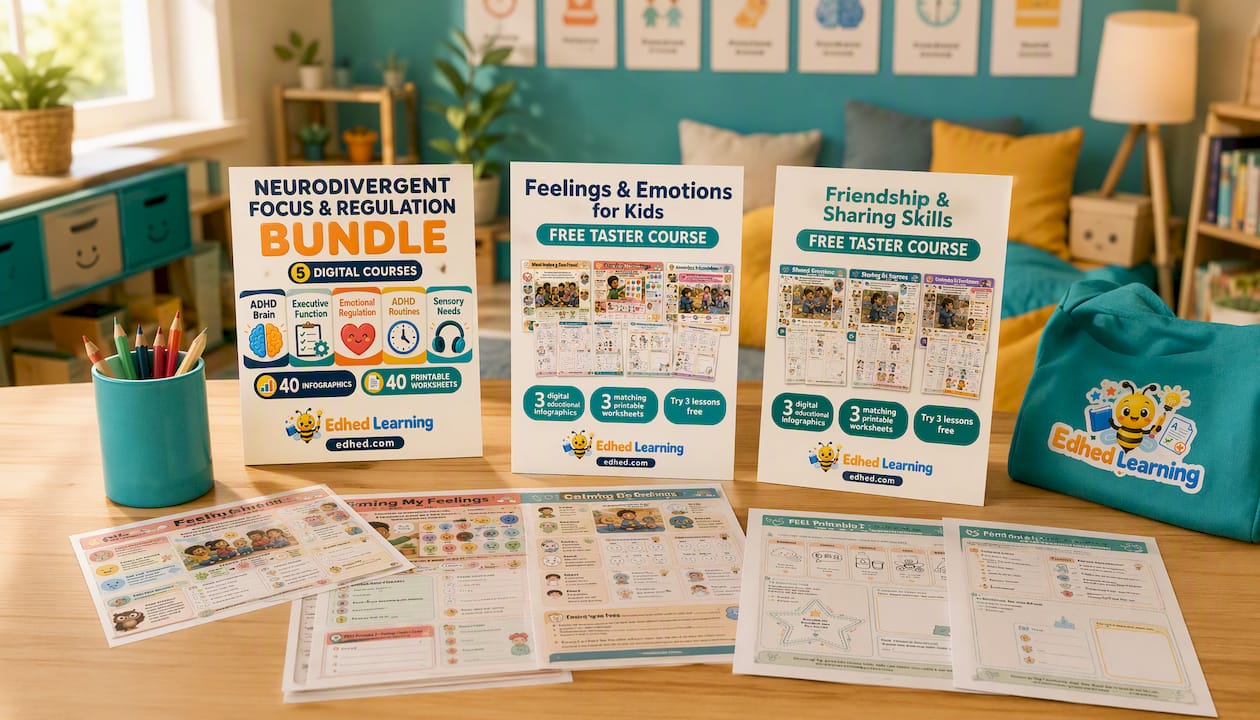
If you want to test the waters before buying, start with the FREE Feelings & Emotions for Kids taster course, which pairs well with calming break activities, or the FREE Friendship & Sharing Skills course if social-emotional tie-ins matter more for your group. Both are free, download instantly, and give you a real sense of how Edhed’s visual style lands with kids before you commit to a full bundle. Grab the focus and regulation bundle today and have a printable sensory system ready before your next school week starts.
Sources
- Creative Brains Grow Here — Sensory break printable and 5-minute menu
- DrSensory — Printable movement break cards
- Activate. Integrate. — Everyday sensory breaks that work
- Beds & Luton Children’s Health — Exercise and movement for neurodivergent children
FAQ
What Are Some Examples of Sensory Breaks?
Common examples include wall pushes, animal walks, chewy snacks, glitter jars, and weighted lap pads. The right choice depends on whether the child needs calming input, alerting input, or heavy work, and matching the activity to that state matters more than which specific activity you pick.
What Are 40 Quick and Easy Sensory Break Ideas?
Rather than one fixed list, most educators build a bank across categories, movement, proprioceptive, tactile, visual, auditory, and oral, then pull three to five favorites into a rotation. The categorized bank above covers each of those systems with activities that need little or no equipment.
What Are Some Good Break Ideas for the Classroom?
Wall pushes, a quick lap around the room, chair push ups, and a 90 second glitter jar watch all work well because they need no setup and fit inside a five-minute window. Labeling each option by space, time, and effect, as DrSensory’s card system does, makes them faster to choose in the moment.
What Is the 6-Second Rule in Autism?
This isn’t a standard, widely defined term in sensory or autism research, and definitions of it vary depending on the source. Rather than rely on an unclear rule, focus on the better-supported principle of matching sensory input to the child’s current state and watching for signs of overwhelm or agitation.
Recommended
- Sensory Processing & Sensory Needs – Digital Infographic Course & Print
- Understanding Your Nervous System - Visual Course
- ADHD Meltdowns: Calm-Down & Emotional Regulation
- Health & My Body – Kids Digital Infographic Course & Printable Worksheet
→ Key Takeaways
6 sections covered
The essentials from this guide, at a glance.
- 01 Table of Contents
- 02 What Is a Sensory Break, and Why Does It Work?
- 03 How Often Should Kids Take a Sensory Break?
- 04 How to Pick the Right Kind of Sensory Break
- 05 A Categorized Bank of Sensory Break Ideas
- 06 A Ready-to-Use 5-Minute Sensory Break Menu
Frequently Asked Questions About 5 Minute Sensory Breaks
What should I look for when choosing 5 Minute Sensory Breaks?
Start with the use case — size, durability, and where the item will live. Our main collection covers the most-recommended options, and related products can help if you're weighing alternatives.
How do I get started with 5 Minute Sensory Breaks?
The five-step framework above walks through it: categorise, choose the right format, maximise space, build systems, and maintain regularly. Once you have a sense of what you need, browse our full range or jump straight to popular picks.
What makes 5 Minute Sensory Breaks worth investing in?
Quality and longevity. Cheap alternatives crack, warp, or lose their lids — and you end up replacing them. The options across our core collection and related range are built to handle daily use without falling apart.
Can I mix and match different 5 Minute Sensory Breaks types?
Absolutely — and we'd encourage it. Different rooms have different needs. Pair larger items from our main collection with the smaller, more specific options in our related range to build a system that actually fits your home.


